October 09, 2026


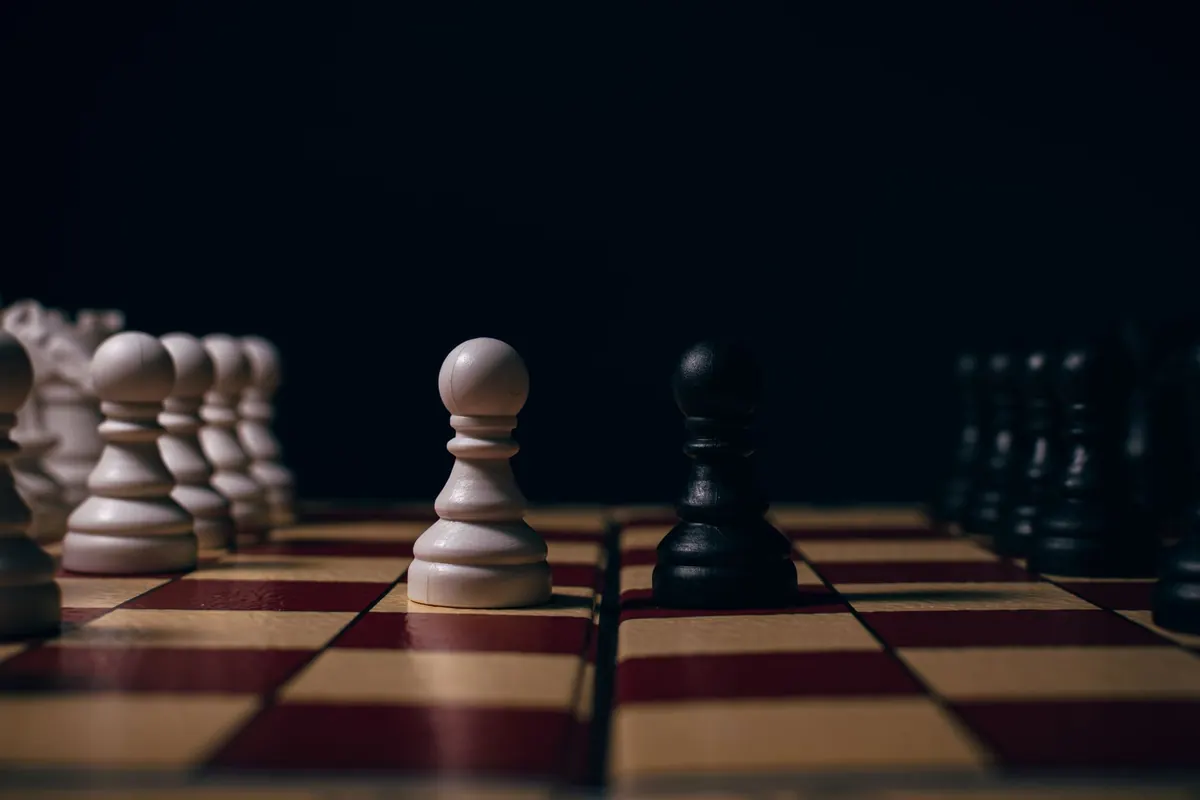
Every blunder has a moment before it. Your hand is halfway to a piece, the idea looks good, the clock is ticking, and then the move lands — and your opponent's reply turns a comfortable position into a lost one. That gap, between the idea and the touch, is where most club games are decided.
Nobody loses a game because they could not find a knight fork. They lose it because they moved too quickly. A checklist is the cheapest available defence against that, and it costs nothing but a few seconds a move.
Good instincts are built on thousands of patterns, and they work beautifully — until the position is unfamiliar or your clock is short. That is when attention narrows and you start seeing what you want to see. A short list forces you to look at the board as it actually is rather than as you hope it is.
Keep it brief. Seven questions, each answerable in a few seconds, run before every move. Not just the hard ones. Especially not just the hard ones.
Every move alters at least two things: the square the piece left and the square it now occupies. Ask what it attacks, what it has stopped defending, and which line it has opened. A quiet rook lift to e8 looks harmless until you notice that your queen has just arrived on e2.
Assume they get their move and that it hurts you. Name the threat in one sentence: "they want to play ...Nd5 and my c-pawn is pinned", or "they are threatening to double my f-pawns". Small threats matter as much as mate threats. If you cannot name their threat, you cannot sensibly answer it.
Count the attackers that can reach your king's area and compare them with the defenders that are genuinely nearby, not merely on the board. Then check whether your intended move removes a defender, opens a file near your king, or pushes a pawn in front of it. Castling is not automatically safe, and a king left in the centre is fine only while the centre stays closed.
Scan your own army and count what is defended by nothing at all. Two loose pieces are enough for a tempo-winning tactic. Then look for overloaded defenders: if a single piece is holding two things together, taking one of them may be a tactic rather than a trade.
Pawns cannot go back, so every push is permanent. Before you play it, ask which squares it abandons, which diagonal it opens, and which of your own pieces it blocks. Pushing h6 to chase a bishop can be sensible, but it leaves g6 tender and gives the bishop something to aim at later.
This is the question that saves the most games. Picture their reply, then picture it again: if your opponent could move twice in a row after your move, what would they play? Checks, captures and threats first. If the answer makes you uncomfortable, you have found the flaw while it is still free to fix.
If the honest answer is "it is my turn", look again. Improve your worst-placed piece, or make a move that creates a second problem for your opponent. Holding the position is a perfectly good plan when you are defending, but it should be a decision, not a default.
Seven questions in a row sounds slow. In practice it takes about thirty seconds, and it collapses into a routine:
When you are short of time, compress the routine rather than abandoning it. One question — what is their best reply? — plus a scan for undefended pieces will catch most disasters.
Any of those is a signal to slow down for ten seconds. The clock rarely punishes you as badly as the blunder does.
Checklists do not stick because they are sensible. They stick because you practise them somewhere cheap. In longer games, write your opponent's threat in the margin of your scoresheet before you move; the act of writing forces the check. When you review a loss, mark the point where you stopped asking questions, not just the move that lost material — you will usually find it two or three moves earlier.
Online, play a batch of slow games with the list beside the screen and one rule: no move until all seven have been considered. It will feel ponderous for a fortnight and then it will feel like thinking.
The aim is not to recite seven questions forever. It is to reach the point where your hand stops a centimetre above the piece on its own, because some part of your attention has already begun asking the questions and looking for the answers. That pause is worth more rating points than any opening you could learn this month.
Photo: 12019 / Pixabay
Chess strategy and tactics for your desk.
Copyright © 2026 Rook Desk. All rights reserved. Rook Desk.