October 09, 2026



Most chess clubs start with the same small problem: three or four people who want somewhere to play, and no idea where to put them. The good news is that you do not need a committee, a constitution or anyone's official blessing. You need a table, a light that actually works, and one evening a week you are prepared to defend. A pub or a library is often the ideal home for that.
A good chess venue is not simply a room with tables. It is a room that is quiet at the hour you want it, and that already has a reason for people to walk through the door.
Pubs work because they are social by default. Someone can wander over, watch a game for two minutes and sit down without feeling they have joined anything. The trade-off is noise and competition for space. A Tuesday quiz night will sink your club faster than any opening trap. Ask which evenings are quietest and whether the same tables can be kept free each week.
Libraries work because they are calm, free, and already associated with reading and thinking. The trade-offs are closing times, booking systems and the fact that you cannot always talk freely. Some libraries have meeting rooms you can reserve; others are happy for you to use a corner of the main floor if you keep the volume down.
Whatever you pick, visit at the exact time you plan to play. Look at the lighting — bad light over a board ruins an evening — the size of the tables, the noise, the parking, and whether the bus stop is nearby. Also ask yourself whether a stranger could find you easily. Visibility matters more than comfort in the first few months.
Turn up in person, at a quiet moment, and speak to whoever is in charge. A short, clear conversation now saves a lot of awkwardness later.
Then be a good guest. Buy something, keep the noise reasonable, stack the chairs, wipe the table, and leave on time. Clubs get asked back because they are easy to have around, not because they are large.
Your first job is not to find chess players. It is to be findable. Say plainly what is happening: Friendly chess, all levels, Tuesdays from 7pm, just turn up. That sentence does more work than any poster with a knight on it.
Put it on the venue's noticeboard, the library's community board, local Facebook groups, and any workplace noticeboard you can legitimately use. Mention it to the staff — they will overhear customers saying "I used to play a bit" and can send them your way.
Be prepared for a slow start. Turn up whether or not anyone has confirmed. Set up two boards with a sign on the table. Play a game with whoever is there, even if that is the barman. A club that visibly exists on week three is far more likely to exist on week ten.
Do not chase strong players first. Chase people who will keep coming. A club of six regular improvers is more durable than a club of two experts and a lot of empty chairs.
You want something that works when you are ill, tired, or on holiday. Keep it light.
A simple evening might run like this: arrive and set up from 7pm, casual games and chatting until about 7.30, then one longer game with clocks, and free blitz afterwards for anyone still awake. A common time control is twenty minutes each with a small increment, long enough to think, short enough to finish.
Keep a ladder sheet on paper: names down the side, results each week, and the rule that you may challenge anyone within a couple of places of you. It sounds old-fashioned and it works, because everyone can see where they stand without a spreadsheet.
You do not need to affiliate with anyone to play friendly games. Grading and league entry are separate questions, and you can leave them for another year. Be honest with new members about this so nobody expects their result to appear on a national list.
Same night, same time, every week. Consistency beats enthusiasm.
Greet people at the door and pair newcomers with someone roughly matched. Nothing kills a beginner's interest faster than being dismantled by the strongest player in the room in twelve moves. Mix the pairings up, and let the strongest players spend some of the evening teaching rather than winning.
Keep a simple contact list, whether that is a group chat or an email list, and use it to say when you are not there. Rotate who brings the sets so no one person is carrying the whole thing. If you start collecting money, keep a written record of what comes in and what goes out, and be clear with the venue about any arrangement. For anything beyond that — insurance, affiliation, safeguarding — take proper advice rather than trusting a forum thread.
If under-18s are likely to attend, think about it before you advertise. Check the venue's own policy, make sure adults are never alone with a young member, and ask your local authority or a national chess body for guidance if you are unsure.
The clubs that last are rarely the ambitious ones. They are the ones that meet on the same night, in the same corner, with the same battered chess sets, and a person who reliably turns up to set them out. Start this week, keep it small, and let it grow at its own pace.
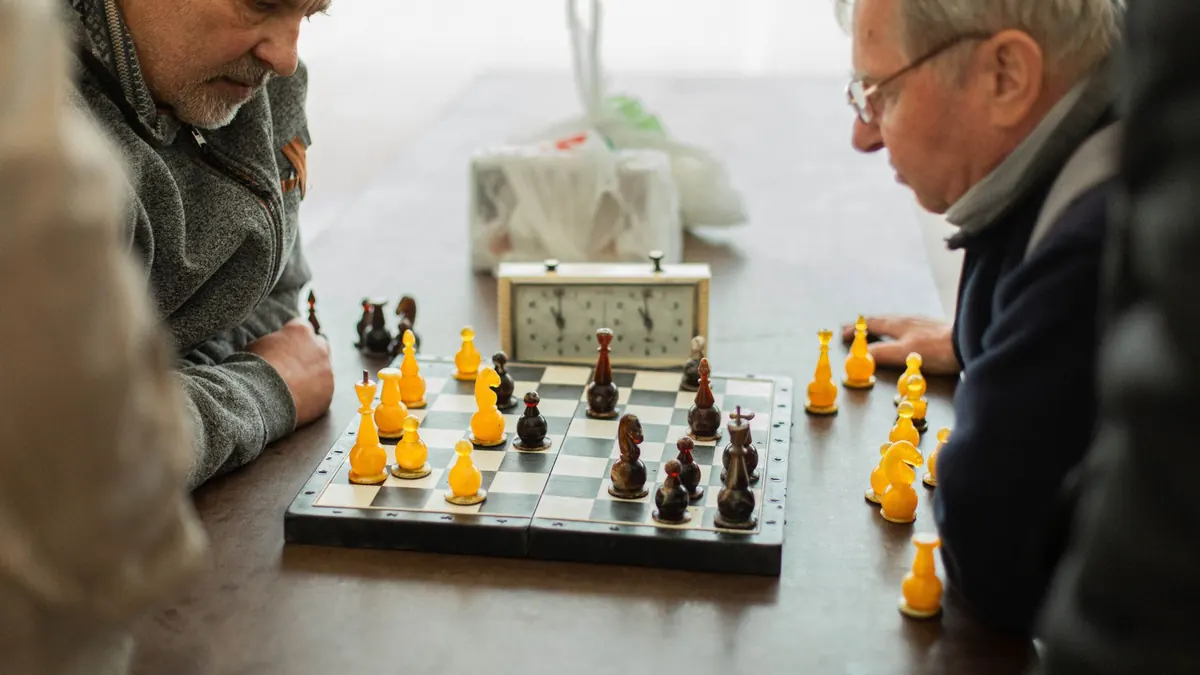
Photo: Pexels / Pixabay
Chess strategy and tactics for your desk.
Copyright © 2026 Rook Desk. All rights reserved. Rook Desk.