October 09, 2026


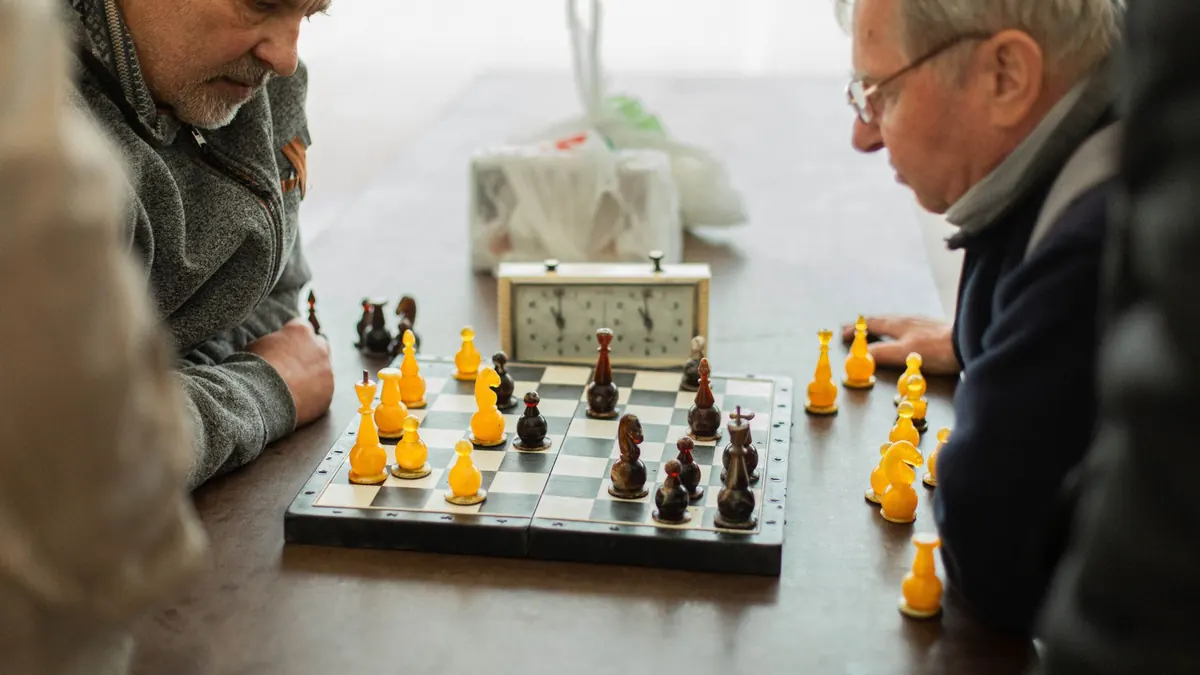
Most club games are not decided by deep positional understanding. They are decided around move twenty-something, when a knight lands on a square nobody checked, or a rook slides onto a back rank that has been quietly undefended for ten moves. One player sees it. The other spends the drive home working out where it went wrong.
The encouraging part is that the same handful of mistakes turns up again and again, in almost every game, at almost every level below expert. Learn to watch for these five and your results will move faster than any opening book can manage.
A pin works because a piece cannot move without exposing something more valuable behind it. When a bishop or rook lines up against a king, the piece in front is frozen by law. When it lines up against a queen or a rook, the piece in front is not frozen, but it is tied down — moving it loses material, so it may as well be nailed to the board.
The usual beginner error is spotting the pin and then stopping. You play Bg5, you see the knight on f6 pinned to the queen on d8, and you assume the work is done. It isn't. A pin is only a plan if you have a second move against the pinned piece. With that knight tied down, moves like h3 and g4, or pushing e4–e5, gain time because the opponent cannot comfortably answer. If you have no follow-up, the pin is decoration, and your opponent will simply unpin with ...h6 or ...Be7.
Turn the telescope around too. Before every move, ask whether the square you are heading for is covered by a bishop that would pin you. A knight developed to f3 in front of a queen on d1 can be a genuine nuisance once ...Bg4 appears, and the resulting doubled pawns will not repair themselves.
The knight that takes your rook and then your queen on move eighteen did not appear from nowhere. It was sitting on its square the whole time, waiting for two of your pieces to become loose. Forks are not conjured; they are collected, and they are only available when pieces are undefended or badly placed.
Beginners lose material to forks because they look at the piece they are moving, not at the whole board. An undefended bishop on b5, a rook on h8 with nothing guarding it, a queen that has wandered to a5 — none of these look like mistakes until a knight arrives. The opponent does not need brilliance, only one loose piece and a little patience.
A simple routine before you commit to a move:
Playing a few friendly games while silently naming your loose pieces after each move feels ridiculous. It also works, and quickly.
Castling tucks your king into a corner and parks it on a square that a rook or queen can reach along an open file. Games at club level end constantly with mate on the back rank — often when the losing player is a piece up and feeling comfortable.
The pattern is always the same. Your king sits on g1 with pawns still on f2, g2 and h2, your rook has left f1, and no piece covers the first rank. All the opponent needs is one rook or queen arriving on the rank. The defensive fix is cheap: once your rook has moved and the middlegame has settled, play h3 or g3 to give the king air. Be sensible about the timing, though. Pushing that pawn creates a hook for an attack and weakens the squares around your king, so do it when the position is calm rather than in the middle of a storm.
From the attacking side, the clue is an overloaded defender. If the only piece guarding the back rank is also defending a knight or holding a pawn on the other wing, that piece is doing two jobs and doing neither well. Trade it off, or force it to choose.
When a bishop sits on b2 and a knight stands in front of it, moving that knight unleashes the bishop against a king on g7 or a rook on h8. Beginners focus on the piece they are moving and forget the piece it was blocking. Before every move, glance along the line your piece is leaving behind. The same idea applies to discovered checks, which are the most dangerous of all because the moving piece is free to do damage while the check is dealt with.
A piece defending two things is perfectly fine — until you attack both of them on the same move. Look for a defender that is guarding a piece and a square, or two pieces on opposite sides of the board. A quiet threat against one of its duties is often enough to win material, because the defender cannot be in two places at once.
Every exchange is a chance to improve your position, and beginners routinely throw that chance away by grabbing back with whichever piece is nearest. The count of attackers and defenders matters, but it is not the whole story.
Before you start a sequence of captures, work out how it ends, not just how it begins. Ask whether a different recapture would open a file for your rook, keep your pawns connected, or leave you with a better minor piece. If you are ahead in material, trade pieces willingly; if you are behind, keep them on the board and give yourself chances to complicate. A pawn capture that gives you a passed pawn is frequently worth more than the tidier recapture with a piece.
None of this requires memory tricks or long study. It requires one habit, applied on every single move, in every single game. Once you have chosen your move, imagine it has already been played and look at the position from your opponent's side of the board.
Checks, captures, threats — in that order, every move, seen through your opponent's eyes.
In practice that means three quick questions. Are there any checks, including discovered ones? Are there any captures, particularly of a piece that just became undefended? Is there a threat I have been ignoring — a fork, a back-rank mate, a pawn one square from promotion? You will be surprised how often the answer to one of those three is uncomfortable, and how often the move you were about to play can simply be replaced by a better one.
The habit costs a few seconds and saves whole games. Build it in slow chess first, where you have time to be deliberate; blitz will take care of itself, and there is no point trying to form a habit at speed. Ten minutes of tactics puzzles a day, solved slowly and accurately rather than guessed at, will do more for your club results than another opening line you will forget by move twelve.
Your opponents are not beating you with deep preparation. They are beating you because they looked at the board one more time than you did.
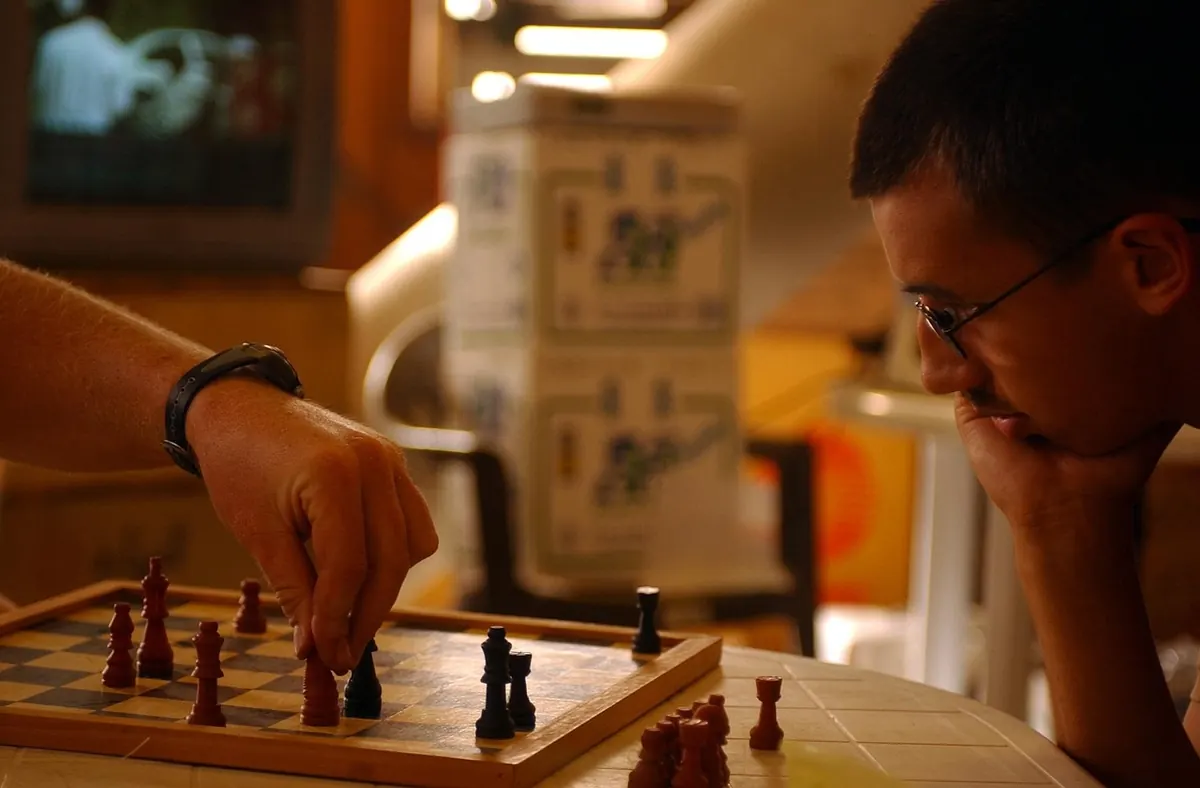
Photo: stevepb / Pixabay
Chess strategy and tactics for your desk.
Copyright © 2026 Rook Desk. All rights reserved. Rook Desk.